Articles
Commercial Property Rental in Israel: Offices and Warehouses
Commercial property rental in Israel. Professional transaction support: from Tabu verification to Arnona calculation. Finding offices and warehouses for your bu
V
Viola Goldberg
- April 9, 2026
- 6 min reading time
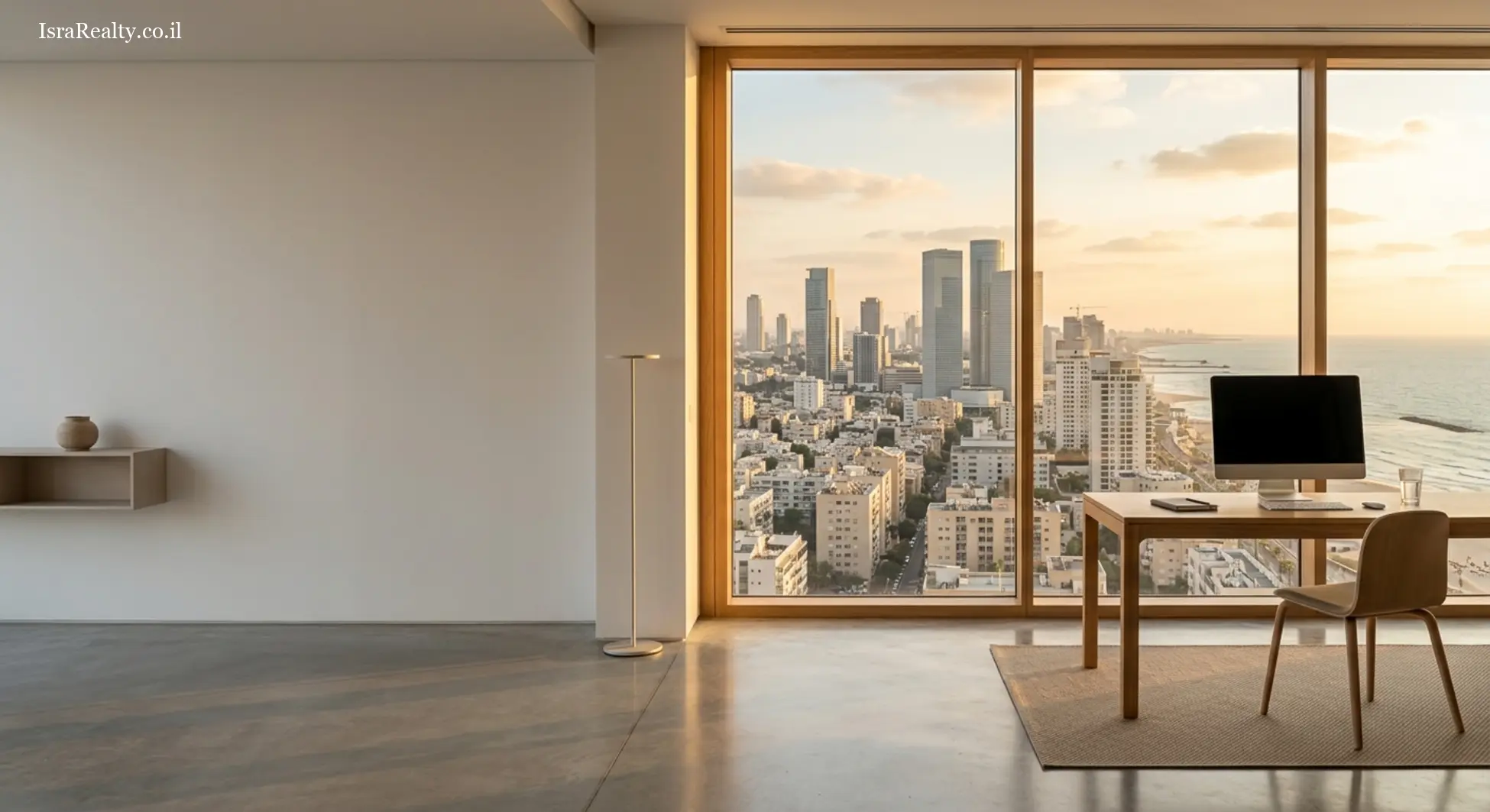
Commercial Property Rental in Israel for Business
IsraRealty Team
Real Estate Market Analytics Department
Renting commercial property in Israel is a multi-level process where the total cost of ownership consists of the base rate, municipal tax (Arnona), management fees (Dmei Nihul), and VAT (MAAM). For a successful business launch or office relocation, it is important to consider not only the location but also the technical condition of the premises ("Ramat Ma'atefet" or fully finished), as well as payment indexation terms. To answer your question about complexity: commercial leasing in Israel requires a mandatory legal audit of the contract, as most agreements strictly protect the landlord's interests.
- Hidden Costs: Always add 17% VAT to the base rental rate, and keep in mind that Arnona for commercial premises is 3–5 times higher than for residential properties.
- Indexation: A standard lease agreement is always tied to the Consumer Price Index, which may increase your payment monthly or annually.
- Property Condition: Offices are often rented in "Shell & Core" condition (bare concrete walls), which requires significant capital investment in renovation before starting operations.
- Guarantees: Landlords typically require a bank guarantee (Arvut Bankait) in the amount of 3–6 months' rent.
Types of Commercial Real Estate in Israel
The Israeli commercial real estate market is segmented by functional purpose. The choice of premises type directly impacts your tax burden and business licensing requirements (Rishuy Asakim).
Offices
The most active segment, concentrated in Tel Aviv and surrounding cities. Office rentals are available in two formats:
- Ramat Ma'atefet (Shell & Core): Premises without internal finishing, air conditioning, or lighting systems. Offers layout flexibility but requires time for build-out.
- Finished Office (Gamar): Premises with interior finishes, often left by a previous tenant. Allows for move-in and start of operations within a few days.
Industrial & Logistics
Renting a warehouse in Israel is becoming increasingly difficult due to land shortages in the center of the country. Major logistics hubs are shifting toward Haifa, Ashdod, and peripheral zones like Emek Hefer. It is crucial to verify ceiling heights, floor load capacity, and the availability of loading ramps.
Retail
Premises for shops or restaurants are evaluated based on "traffic." In Israel, both street retail and spaces in shopping centers (Kenyons) or open-air retail parks are popular. Contracts in malls often include a percentage of turnover in addition to the fixed rent.
Key Financial Components of the Contract
When planning your budget for commercial property rental in Israel, you cannot rely solely on the price per square meter listed in the ad.
| Expense Item | Description | Estimated Budget Impact |
|---|---|---|
| Base Rent | Payment for usable floor area | Main expense |
| Arnona (Municipal Tax) | Depends on city and business type | +20–40% on top of rent |
| Dmei Nihul (Management Fees) | Building maintenance, elevators, security | 15–30 ILS per sq. m |
| VAT (MAAM) | Value Added Tax (17%) | Added to all payments |
| Electricity and Water | Commercial meter rates | Depends on consumption |
Arnona is a critical factor. Municipalities (Iriyot) set different rates for offices, banks, insurance companies, and warehouses. For example, Arnona for an office in Tel Aviv will be significantly higher than in an industrial zone in Lod or Petah Tikva.
Need help calculating the total rental cost, including Arnona and taxes? Our analysts will prepare a detailed breakdown for your chosen locations.
Business Geography: Where to Rent?
The choice of city determines not only prestige but also access to talent pools and transport logistics.
- Tel Aviv: The hub for high-tech and finance. Rothschild, Sarona, and Menachem Begin Road are the most expensive and sought-after areas.
- Ramat Gan (Bursa District): A major business hub near the Savidor-Merkaz train station. High concentration of office towers and excellent transport accessibility.
- Herzliya Pituach: A technology center hosting offices of international corporations, characterized by developed infrastructure and proximity to the sea.
- Haifa: The country's main logistics hub with a port zone. An ideal place to rent a warehouse or industrial facility.
Legal Nuances of Lease Agreements
Commercial lease agreements in Israel differ significantly from residential ones. There is no automatic tenant protection, so every word matters.
Lease Term and Option
The standard term is 3 or 5 years with an option to extend for a similar period. It is important to fix the price adjustment mechanism during the option period in advance (usually +5% to the base rate or linked to market price, but not less than the current one).
Bank Guarantees
Landlords require an "Arvut Bankait" — an irrevocable bank guarantee. These are funds frozen in your account that the landlord can access if you breach contract terms. As an alternative, a "Shek Bitchon" (security check) is sometimes accepted, but this is rare for major properties.
Insurance
The tenant is obligated to insure the premises, equipment, and third-party liability. It is important to include a "Cross Liability" clause so that the insurance also covers damage to the building owner.
Frequently Asked Questions
What is "Dmei Nihul" and who pays it?
Dmei Nihul are building management fees. They cover cleaning of common areas, elevator maintenance, fire extinguishing systems, security, and hallway lighting. These costs are always borne by the tenant.
Can I get a discount on business Arnona?
Discounts on commercial Arnona are rare, usually granted to new startups in specific development zones or during long-term vacancy of the premises (a "vacant property" discount is given once for a limited period).
What is the difference between gross and net area?
In Israel, rent is often calculated using the "Gross-Gross" system, which includes not only the office area itself but also a portion of common corridors, elevator lobbies, and stairwells. The difference can be 15–25%.
What is the standard broker commission for office rentals?
The standard real estate agency commission for signing a commercial contract is the sum of one month's rent plus VAT.
How does index-linking (Madad) work?
Rent is usually indexed monthly according to changes in the Consumer Price Index. If the index rises by 0.5%, your next payment will also increase by this percentage.
Planning to rent commercial space in Israel? We will find the right property, conduct a technical audit, and protect your interests during contract signing.
Get a consultationConclusion
Renting commercial property in Israel is a strategic decision that requires a balance between location and operating costs. Understanding payment structures like Arnona and Dmei Nihul, and paying attention to indexation details and bank guarantees, will help avoid unexpected expenses. It is recommended to start searching for a property 3–6 months before the intended move-in, especially if you plan to renovate a "Ramat Ma'atefet" space.
Disclaimer: This material is for informational purposes only and does not constitute legal or financial advice. Transaction parameters may vary depending on the specific municipality and the landlord's conditions.
Update Date: 2026-04-09
Need targeted options?
Find properties for this scenario
Leave a request and we will build a shortlist by area, budget, and property type without a public listing grid.
Get Property ShortlistMore articles on this topic
An editorial selection on market context, locations, and purchase scenarios.

April 12, 2026
Real Estate Investment in Israel: A Guide to Purchasing and Yield
Planning to invest in Israeli real estate? Learn how to choose a high-yield property, obtain a mortgage, and navigate the Tabu verification process with IsraRea
Read article
April 11, 2026
How to Buy Real Estate in Israel: A Complete Investor's Guide
Looking to buy an apartment in Israel? Comprehensive transaction support: from Tabu verification to mortgage (mashkanta) processing. IsraRealty experts will hel
Read article