Articles
Commercial real estate in Israel: investing in seaside offices
Investing in seaside commercial real estate in Israel. Offices and retail spaces in Tel Aviv and Netanya. Tabu legal verification and transaction support from I
V
Viola Goldberg
- March 29, 2026
- 6 min reading time
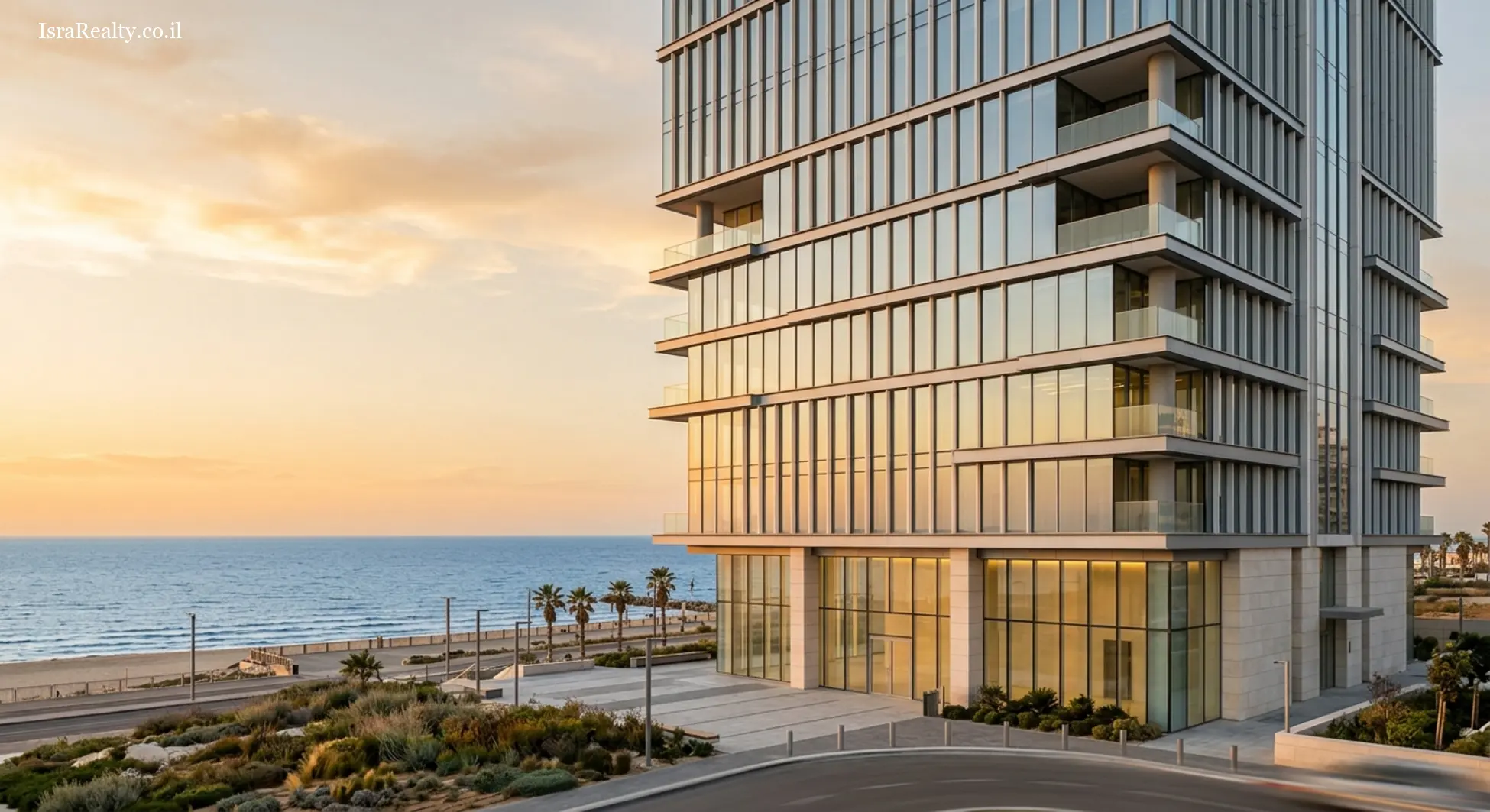
Commercial real estate in Israel by the sea for investment
IsraRealty Team
Real Estate Market Analysis Department
Buying commercial real estate in Israel on the Mediterranean coast is a strategy that combines high asset liquidity with stable rental income. Unlike the residential sector, commercial spaces (offices, retail) show higher yields and offer investors legally protected long-term contracts. In 2025–2026, demand is shifting towards Tel Aviv and the developing business zones of Netanya, where proximity to the sea is becoming a key factor for prestigious business centers.
- High yield: The average ROI for seaside commercial properties is 6–8% per annum, which is significantly higher than the yield from residential real estate.
- Transaction transparency: All properties undergo mandatory verification in the Land Registry (Tabu), which guarantees the absence of legal encumbrances.
- Tax specifics: When purchasing a commercial property, a purchase tax (Mas Rechisha) and VAT (Ma'am) are paid; the latter is refundable for businesses.
- Location as an asset: First-line seaside property in Tel Aviv and Netanya ensures stable growth in price per square meter (capitalization) over a 5–10 year horizon.
Why is investing in commercial real estate in Israel profitable?
The Israeli commercial space market is traditionally considered a "safe haven" for large and medium-sized capital. Unlike apartments, where rental terms rarely exceed 1–2 years, offices and retail spaces are leased for 5, 10, or even 15 years with automatic price indexation linked to the Consumer Price Index.
Main advantages of coastal locations:
- Prestige: Having an office by the sea increases a company's status, attracting solvent tenants from the high-tech and finance sectors.
- Limited resources: Land on the first line of the sea in Israel is a scarce asset. New projects in Tel Aviv or Netanya are sold out even at the "excavation" stage.
- Infrastructure development: The construction of light rail lines and new interchanges in coastal cities increases property accessibility and, consequently, their value.
Comparing popular destinations: Tel Aviv vs. Netanya
When choosing a property, investors often hesitate between dynamic Tel Aviv and promising Netanya. Both cities are located on the coast but have different investment profiles.
| Parameter | Tel Aviv (Center/Coast) | Netanya (Seaside business zones) |
|---|---|---|
| Average yield (ROI) | 4.5% – 6% | 6.5% – 8.5% |
| Entry threshold | High | Medium |
| Tenant type | IT giants, banks, international brands | Medium business, medical centers, retail |
| Price growth potential | Stable moderate | High (due to district development) |
| Liquidity | Maximum | High |
Planning to invest in an office or retail space but don't know where to start with legal verification? IsraRealty experts will help you find a property with a clean history in the Tabu and calculate the real payback taking taxes into account.
Purchase stages and legal nuances
Acquiring a commercial space in Israel is a multi-step process that requires the participation of a lawyer and a tax consultant. It is important to understand the difference between buying a finished property and participating in a project at the construction stage.
1. Checking the Tabu record (Land Registry)
This is the foundation of security. An extract from the registry (Kushan Tabu) confirms the seller's ownership rights and the absence of liens, arrests, or cautionary entries (priority rights of third parties). Without this check, the transaction is impossible.
2. Transaction taxation
The following rules apply to commercial properties:
- Mas Rechisha (Purchase Tax): Usually a fixed 6% of the transaction amount. Unlike residential real estate, there is no progressive scale for a single property.
- Ma'am (VAT): 17%. If the buyer is registered as a business (Osek Murshe or Ltd), the tax can be recovered or credited, making the purchase more profitable for legal entities.
- Mas Shevach: Capital gains tax paid by the seller upon the future sale of the property.
3. Financing (Mashkanta)
Israeli banks are willing to finance the purchase of commercial real estate. Basic conditions:
- LTV (loan amount from value): usually 50% to 70%.
- Loan term: up to 15-20 years.
- Basis: business plan or an existing lease agreement.
Types of properties for seaside investment
The choice of space type depends on the investor's strategy — whether they want to receive passive income or use the area for their own business.
- Office spaces: The most in-demand segment. Offices in modern business centers by the sea in Netanya or the north of Tel Aviv are popular with technology companies.
- Retail spaces (Street Retail): First floors of buildings on tourist promenades. Ideal for cafes, pharmacies, or brand stores.
- Multifunctional complexes: New projects combining offices, apartments, and retail space ensure risk diversification.
We offer exclusive access to commercial properties in new buildings in Israel with 0% commission for the buyer. Our specialists will provide full support: from payback analysis to registering rights in the Tabu.
Get a consultationFrequently Asked Questions
What yield is considered normal for an office in Israel?
For central areas of Tel Aviv, a 5–6% yield is considered normal. In developing areas, such as the industrial zones of Netanya or Petah Tikva, you can expect 7–8% per annum.
Do I need to pay VAT when buying commercial real estate?
Yes, when purchasing a commercial property, VAT (Ma'am) of 17% is paid. If the buyer is a registered entrepreneur, this tax is refundable.
Can a foreigner buy commercial space?
Yes, foreign citizens can acquire commercial real estate in Israel on private land. If the land belongs to the state (ILA), additional approvals may be required, but in most cases, there are no restrictions.
What is a Tabu check?
This is a check of the extract from the state registry of real estate rights. It confirms who the true owner is, the area of the property, and the absence of debts or prohibitions on sale.
What expenses does the owner of commercial real estate incur?
Main expenses include municipal tax (arnona), which is usually paid by the tenant in the commercial sector, building maintenance costs (dmei niul), and taxes on rental income.
Conclusion
Investing in commercial real estate in Israel by the sea is an opportunity to secure capital in a stable economy with growing demand for quality spaces. When choosing between Tel Aviv and Netanya, it is important to consider not only the current price but also the potential for district development, transport accessibility, and the quality of property management. Professional audit of the transaction and proper tax planning allow you to maximize net profit and minimize ownership risks.
The information is for reference purposes and does not constitute an individual investment recommendation. Prices and tax rates may change according to Israeli legislation.
Last updated: 2026-03-29
Need targeted options?
Find properties for this scenario
Leave a request and we will build a shortlist by area, budget, and property type without a public listing grid.
Get Property ShortlistMore articles on this topic
An editorial selection on market context, locations, and purchase scenarios.

April 12, 2026
Real Estate Investment in Israel: A Guide to Purchasing and Yield
Planning to invest in Israeli real estate? Learn how to choose a high-yield property, obtain a mortgage, and navigate the Tabu verification process with IsraRea
Read article
April 11, 2026
How to Buy Real Estate in Israel: A Complete Investor's Guide
Looking to buy an apartment in Israel? Comprehensive transaction support: from Tabu verification to mortgage (mashkanta) processing. IsraRealty experts will hel
Read article