Articles
Buying a Private House in Israel: A Guide to Choosing and Purchasing |
Want to buy a house in Israel? IsraRealty experts will help with Tabu verification, mortgage (mashkanta) calculation, and full legal support for the transaction
V
Viola Goldberg
- March 26, 2026
- 6 min reading time
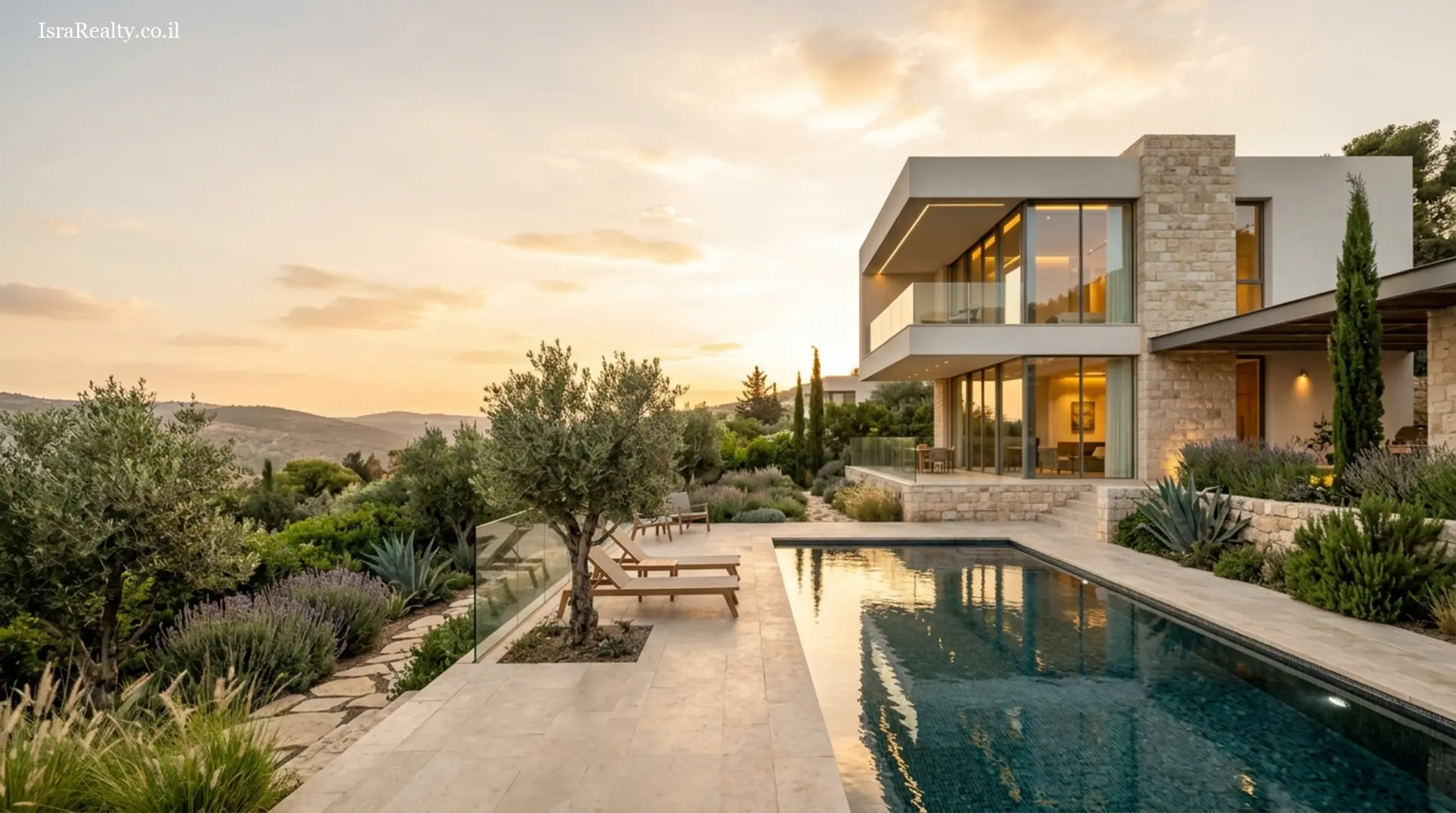
Buying a Private House in Israel with a Land Plot
IsraRealty Team
Real Estate Analytics Department
Buying a private house in Israel is an investment in quality of life and a long-term asset with high liquidity potential. Unlike apartments, houses (villas and cottages) offer privacy, your own garden, and the possibility of expanding living space. Primary demand is concentrated in coastal cities such as Netanya and Caesarea, as well as in the suburbs of the central region, where infrastructure and transport accessibility are well-developed.
- Legal Status: When buying, it is critical to check the status of the land — whether it is private property (Tabu) or long-term leasehold from the state (Minal).
- Tax Burden: Mas Rechisha (purchase tax) is calculated on a progressive scale and depends on whether the house is the buyer's only property.
- Additional Expenses: Owning a house requires accounting for maintenance costs for the plot, pool, and higher property tax (Arnona).
- Financing: Obtaining a mortgage (mashkanta) for a house has its own specifics, including an evaluation of the plot and the building by a licensed appraiser (shmay).
Types of Private Real Estate in Israel
The Israeli real estate market offers various formats of private housing that differ in plot size, building type, and level of privacy. The choice of a specific type depends on the buyer's budget and goals—whether for family living or investment.
- Villa: A detached house on its own plot of land. Provides maximum privacy and often includes a pool and a spacious garden.
- Cottage: Usually a two-story house that may be part of a residential complex or share a wall with a neighboring building.
- Duplex / Townhouse: A house for two families (semi-detached), where the plot is divided in half and the buildings share a structural wall.
- Building Plot: The opportunity to build a house according to an individual project while observing the building regulations (taba) of a specific area.
Legal Verification: Tabu Registry and Minal
In Israel, there are two main forms of land ownership for private houses. Understanding the difference between them determines the complexity of the transaction and the owner's future expenses.
Tabu Extract (Nessach Tabu)
This is the registry of rights for real estate in private ownership. Buying a house "in Tabu" is considered the most prestigious and straightforward from a legal standpoint. The extract records all owners and the presence of liens, attachments, or third-party rights.
Minal Land (Israel Land Authority)
About 90% of the land in the country belongs to the state. In this case, the buyer acquires a long-term leasehold right (usually for 49 or 99 years). When dealing with such property, it may be necessary to pay a "consent fee" (dmei haskama) or privatize rights, which requires thorough inspection by an IsraRealty lawyer.
Costs and Taxes When Buying
The final cost of a private house consists not only of the property price but also of related expenses, which can amount to 10-15% of the transaction value.
| Expense Item | Approximate Amount | Note |
|---|---|---|
| Mas Rechisha (Purchase Tax) | 0% – 10% | Depends on the cost and resident/owner status |
| Attorney Fees | 0.5% – 1% + VAT | Mandatory legal support for the transaction |
| Appraisal (Shmaut) | 2,500 – 5,000 ILS | Necessary for obtaining a mortgage |
| Broker Commission | 2% + VAT | For secondary market purchases |
For new immigrants and first-time homebuyers in Israel, preferential Mas Rechisha rates are provided. Our experts will help calculate the exact amount of tax obligations before signing the contract.
Are you planning to buy a house in Israel and want to avoid legal risks? We will conduct a full check of the property in the Tabu and help optimize tax payments. Contact us for an initial market analysis.
Popular Locations for Buying Villas
The choice of location determines not only the cost but also the future liquidity of the asset. Investments in the private sector are most justified in areas with a shortage of available land.
- Netanya and surroundings: The Ir Yamim and Ramat Poleg neighborhoods offer modern cottages by the sea. Popular among families due to schools and parks.
- Caesarea: Elite villas on large plots. A prestigious town with golf courses and a high level of security.
- Herzliya Pituach: One of the most expensive areas in the country, home to premium real estate and embassies.
- Rishon LeZion: The western districts of the city offer high-quality private homes with good transport links to Tel Aviv.
Transaction Stages: From Selection to Key Handover
The process of buying a private house is technically more complex than buying an apartment due to the need to verify land boundaries and ensure there are no illegal extensions.
- Preliminary Check: The lawyer requests an extract from the Tabu and checks the house's compliance with the building permit (heter bniya).
- Property Appraisal: An appraiser confirms the market value and the absence of violations, which is critical for mortgage approval.
- Signing the Contract: Establishing the payment schedule and terms of transfer of rights. Usually, 10-15% is paid upon signing.
- Registering a "Cautionary Note" (Hearat Azhara): Protects the buyer's rights immediately after the first payment.
- Tax and Fee Payments: The buyer is required to pay Mas Rechisha within 60 days of the transaction.
- Final Registration: After full payment, the property is transferred to the buyer's ownership in the Tabu or Minal registry.
Frequently Asked Questions
Can a foreigner buy a private house in Israel?
Yes, foreign citizens can buy real estate on private land (Tabu). Buying on Minal (state) land for non-residents may be restricted or require special permission.
What is the amount of municipal taxes for a villa?
Arnona tax depends on the house's area and location. For private homes in prestigious areas, the Arnona is higher than for apartments and is calculated every two months.
How to check if there are illegal extensions in the house?
To do this, it is necessary to order the services of an engineer or appraiser who will compare the actual layout with the plan approved by the local municipality (Iriya).
What kind of mortgage can be obtained for buying a house?
For residents buying their first home, the mortgage amount can reach 75% of the value assessed by the bank. For investors — up to 50%.
Does having a pool affect maintenance costs?
Yes, having a pool increases water, electricity, and regular maintenance (cleaning, filtration) expenses, and may also affect the calculation of Arnona in some cities.
Need help finding a house and a professional legal check? IsraRealty experts will ensure the security of your transaction and help you find the best option on the market.
Get a consultationConclusion
Buying a private house in Israel is a complex process requiring deep analysis of the legal status of the land and the technical condition of the property. However, owning a villa or cottage in Israel provides undeniable advantages in the form of personal space, comfort, and high asset appreciation. Thorough verification of documents and involving specialized experts at the selection stage is the key to a successful and safe deal.
This material is for informational purposes only and does not constitute legal advice. Information about taxes and fees is current as of the date of publication.
Updated: March 26, 2026
Need targeted options?
Find properties for this scenario
Leave a request and we will build a shortlist by area, budget, and property type without a public listing grid.
Get Property ShortlistMore articles on this topic
An editorial selection on market context, locations, and purchase scenarios.

April 12, 2026
Real Estate Investment in Israel: A Guide to Purchasing and Yield
Planning to invest in Israeli real estate? Learn how to choose a high-yield property, obtain a mortgage, and navigate the Tabu verification process with IsraRea
Read article
April 11, 2026
How to Buy Real Estate in Israel: A Complete Investor's Guide
Looking to buy an apartment in Israel? Comprehensive transaction support: from Tabu verification to mortgage (mashkanta) processing. IsraRealty experts will hel
Read article