Articles
Apartments in renovation areas in Israel: an investor's guide
Investing in Israeli real estate? Learn everything about Pinui-Binui and TAMA 38 programs: risks, benefits, property selection, and expert advice from IsraRealt
V
Viola Goldberg
- June 24, 2026
- 5 min reading time
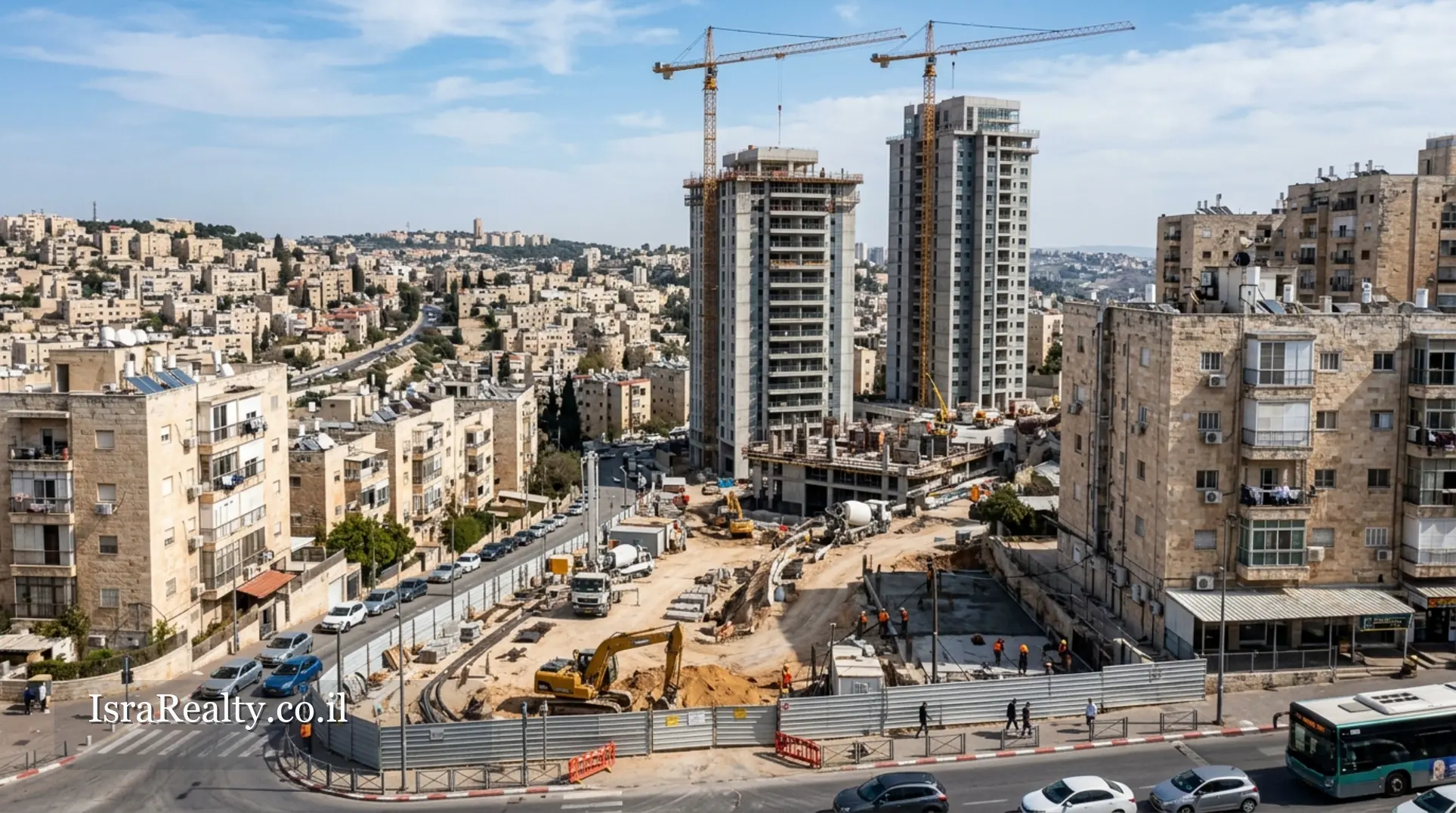
Buying an apartment in a renovation area (Pinui-Binui or TAMA 38/2) is a strategy for acquiring liquid housing in updated infrastructure at a price below the market value of finished new builds. The main benefit lies in the appreciation of the asset after the project is completed. However, the investor must consider long implementation timelines (from 5 to 10 years), risks of permit delays, and the need to verify the developer's reliability. A key success factor is the existence of an approved zoning plan (Taba) and the consent of the majority of the building's residents. IsraRealty experts recommend focusing on projects in central Israeli cities, where housing demand consistently exceeds supply. Before purchasing, it is important to verify the legal validity of the contract and the financial stability of the development company.
- Renovation is a way to buy an apartment in a prestigious area at a reduced price.
- Verifying the project status (existence of permits) is critical for minimizing risks.
- The increase in property value after renovation is on average 20-30%.
- Choose projects with experienced developers who have completed cases.
Term: Housing renovation in Israel (Pinui-Binui and TAMA 38) refers to government programs for the demolition of old buildings or their major reconstruction aimed at increasing seismic resistance and creating modern housing stock. The process includes replacing utilities, expanding living areas, and improving the surrounding territory.
Understanding urban renewal programs in Israel
The Israeli real estate market is actively transforming thanks to urban renewal programs. Understanding the differences between TAMA 38 and Pinui-Binui is the first step for an investor planning to buy an apartment in new areas.
TAMA 38: Strengthening and expansion
The TAMA 38 program was originally created to strengthen buildings against earthquakes. Today, it is more often implemented in the TAMA 38/2 format — the complete demolition of an old building and the construction of a new one in its place. This allows you to get a modern apartment with parking, an elevator, and a balcony in an already established neighborhood.
Pinui-Binui: Comprehensive development
Pinui-Binui (Hebrew for "evacuation and construction") involves the demolition of entire blocks. These are large-scale projects that completely change the face of a neighborhood, including the creation of new roads, parks, schools, and commercial spaces. Investments in such projects require long-term planning.
Comparison of investment strategies
The choice between formats depends on your budget, risk tolerance, and planning horizon.
| Parameter | TAMA 38/2 | Pinui-Binui |
|---|---|---|
| Implementation timelines | 3–5 years | 7–12 years |
| Risk level | Medium | High |
| Price growth potential | High | Very high |
| Legal checks | Contract with residents | Agreement with the municipality |
Criteria for selecting an investment property
To minimize risks when buying an apartment in a renovation project, it is necessary to conduct a thorough audit. IsraRealty recommends paying attention to the following aspects:
- Permit status: At what stage is the Taba (city plan)? Is there already a building permit (heter bniya)?
- Developer reputation: Study the company's portfolio. How many projects have been successfully completed?
- Legal support: Engage an independent lawyer specializing in real estate in Israel.
- Financial guarantees: Ensure that the project is backed by bank support (livi bankai).
Risks and ways to minimize them
Investments in renovation are not without dangers. The main risks include delays in obtaining permits, contractor bankruptcy, or residents withdrawing from contract terms at the final stage.
How to protect your investments:
- Check the cadastral number (gush and helka) of the property in the land registry.
- Demand an up-to-date extract from the registry (tirshumet) to verify ownership rights.
- Assess the liquidity of the area: presence of transport interchanges, proximity to the Light Rail or future metro stations.
- Analyze the purchase agreement for penalty clauses regarding missed deadlines.
Promising areas for renovation
The Israeli real estate market is heterogeneous. The greatest growth potential is shown by cities in the central district (Gush Dan), where land value is extremely high.
- Tel Aviv: High liquidity, but also a high entry cost.
- Ramat Gan: Active development due to proximity to the business center.
- Bat Yam: Attractive prices and an active renewal program for the coastal zone.
- Petah Tikva: A large volume of Pinui-Binui projects with long-term growth potential.
Want to learn more about specific renovation projects? Download our checklist "How to check a developer in Israel" on the IsraRealty website.
Frequently Asked Questions
What is the difference between TAMA 38 and Pinui-Binui?
TAMA 38 is a local project (one building or a group of buildings) aimed at seismic strengthening. Pinui-Binui is a large-scale renewal of entire neighborhoods with complete infrastructure replanning.
What taxes must be paid when buying an apartment in a renovation project?
When buying an apartment in a new building (including renovation), the buyer pays purchase tax (mas rechisha). Rates depend on the value of the property and whether this is your only residence in Israel.
How to check the reliability of a developer in Israel?
Check the developer in the "Contractors Registry" (Rasham HaKablanim), study completed projects, and the company's financial statements. It is important to have a bank guarantee for every shekel invested.
Is it possible to sell an apartment before the project is finished?
Yes, it is possible, but the liquidity of such an apartment depends on the stage of construction. Selling at early stages may be difficult if the buyer cannot obtain a mortgage for a project without permits.
Which areas of Israel are most promising for renovation?
The most promising are cities with a land shortage: Tel Aviv, Ramat Gan, Givatayim, Bat Yam, and Holon. In these cities, demand for new housing always exceeds supply.
What happens if a renovation project is frozen?
If a project is frozen, you remain the owner of the apartment in the old building. It is important that the contract with the developer contains clear conditions for termination and compensation in case of non-fulfillment of obligations.
Planning to invest in Israeli real estate? Contact IsraRealty experts to select current properties in renovation areas: Request a consultation.
Sources: Official portal of the Ministry of Construction of Israel (moch.gov.il), data from the Israel Land Authority. Information is current as of 2024. Legislation in the field of renovation is subject to change; consultation with a real estate lawyer is mandatory before making investment decisions.
Need targeted options?
Find properties for this scenario
Leave a request and we will build a shortlist by area, budget, and property type without a public listing grid.
Get Property ShortlistMore articles on this topic
An editorial selection on market context, locations, and purchase scenarios.
June 23, 2026
Commercial Real Estate in Israel: Buy or Rent
Looking for commercial real estate in Israel? Professional selection of offices, warehouses, and retail spaces for purchase or lease. Expert transaction support
Read article
June 23, 2026
Luxury Seaside Apartment Rentals in Israel | IsraRealty
Looking for luxury seaside apartments in Israel? We offer the best penthouses and villas in Tel Aviv and Herzliya. Premium service and Mediterranean views. Book
Read article