Articles
Investments in Israel's Commercial Real Estate: Offices and Shopping C
Invest in Israel's commercial real estate: offices and shopping centers with yields from 6%. Legal verification in Tabu, full transaction support. Call IsraReal
V
Viola Goldberg
- April 18, 2026
- 5 min reading time
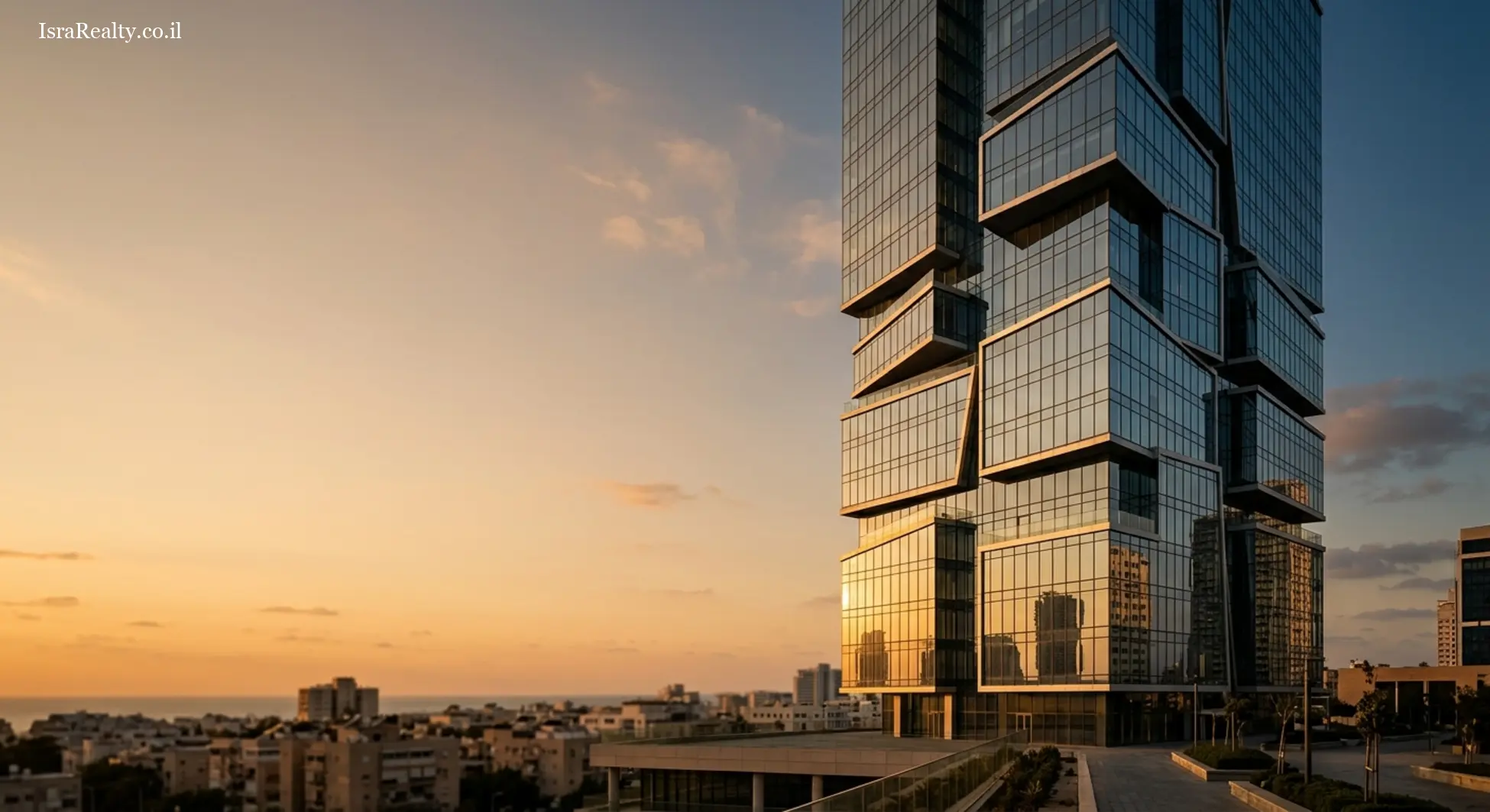
Investments in Israel's Commercial Real Estate: Offices and Shopping Centers
IsraRealty Team
Real Estate Market Analysis Department
Investments in Israel's commercial real estate provide a stable income averaging between 5% and 8% per annum, which significantly exceeds the performance of the residential sector. The market is focused on high-quality office spaces in major business centers (Tel Aviv, Herzliya, Haifa) and modern retail spaces. The main advantages are long-term lease agreements and the transfer of municipal expenses to the tenant.
- High Yield: Commercial properties generate 1.5–2 times more rental income than residential apartments.
- Transparent Taxation: A fixed purchase tax rate (Mas Rechisha) and the possibility of VAT (MAAM) refunds for businesses.
- Minimal Operational Hassle: Property taxes (Arnona) and utilities in the commercial sector are traditionally paid by the tenant.
- Legal Protection: Registration of rights in the state land registry (Tabu) ensures maximum capital security.
Why choose the Israeli commercial sector
Israel's commercial real estate market shows resilience even during periods of economic volatility. Unlike the residential sector, where yields rarely exceed 3%, commercial spaces allow investors to count on more aggressive capital growth. The main driver of demand is the developed high-tech sector, which creates a stable demand for modern Class A offices.
Investments in retail and office spaces are also attractive due to the structure of the lease agreement. In Israel, the "Net Lease" practice is common, where the tenant assumes the costs of management, insurance, and municipal tax (Arnona). This makes the income stream more predictable for the owner.
Types of Income-Generating Properties
Investors have access to several main directions, each with its own risk and payback profile:
- Office Spaces: The most popular segment. Demand is concentrated in the Tel Aviv — Ramat Gan — Bnei Brak "triangle".
- Retail Spaces: Street-retail stores or units in shopping centers. Profitability depends heavily on foot traffic.
- Industrial Real Estate and Warehouses: A growing sector driven by the rise of e-commerce, requiring large spaces.
Comparison: Residential vs. Commercial Real Estate
The choice between residential and commercial funds depends on the investor's strategy, available capital, and planning horizon.
| Parameter | Residential Real Estate | Commercial Real Estate |
|---|---|---|
| Average Yield | 2.5% – 3.5% | 5% – 8% |
| Purchase Tax (Mas Rechisha) | Progressive (up to 10%) | Fixed (6%) |
| Lease Term | 1 year | 3–10 years |
| Maintenance Expenses | Paid by owner/tenant | Mostly tenant |
| Liquidity | High | Medium |
Planning to diversify your portfolio? We will help you find off-market office offers with ready tenants and conduct a full legal due diligence of the property in the Tabu registry.
Taxes and Purchase Expenses
When planning a deal budget, it is necessary to consider associated costs, which differ significantly from apartment transactions.
1. Purchase Tax (Mas Rechisha)
Unlike residential real estate, where the rate depends on whether it is the only residence, a flat rate of 6% of the transaction amount applies to commercial objects (offices, shops, warehouses).
2. VAT (MAAM)
Purchasing commercial real estate is subject to VAT (currently 17%). However, if the buyer is registered as a business entity (Esek Murshe or a company), this tax is refundable. This is an important nuance when calculating initial cash flow.
3. Arnona (Municipal Tax)
In the commercial sector, the Arnona is significantly higher than in the residential sector. However, under the terms of most lease agreements, this responsibility falls entirely on the tenant. For the investor, this means no hidden costs during periods when the property is leased.
Transaction Stages and Tabu Verification
The purchase process requires thorough legal and technical examination. The main stages include:
- Due Diligence: Ordering an extract from the Tabu (Land Registry) to confirm the absence of liens, mortgages, and to verify the owner.
- Zoning Verification: Confirmation through municipal authorities that the premises can be used for offices or retail according to the master plan (TABA).
- Contract Signing: Recording payment schedules, terms of property transfer, and responsibilities of the parties.
- Registration of Cautionary Note (Hearat Azara): Immediate protection of the buyer's rights after the first payment is made.
- Final Registration: Obtaining full ownership rights after all taxes have been paid.
Need help finding an income-generating property in Israel? Our experts will find liquid options, calculate payback, and provide full transaction support.
Get a ConsultationFrequently Asked Questions
What is the average payback for commercial real estate in Israel?
On average, the payback period is 12–18 years, depending on the location and type of object. A net yield of 5-8% per annum makes this one of the most attractive instruments on the market.
Can a foreigner buy an office in Israel?
Yes, foreign citizens have the right to purchase commercial real estate on private land. If the land belongs to the Israel Land Authority (Minhal), additional approvals may be required.
Do I need to pay VAT when buying a commercial property?
Yes, commercial real estate transactions are subject to VAT (17%). Business buyers can file for a refund of this tax, which is standard practice.
Who pays for office maintenance: the owner or the tenant?
Traditionally, all current expenses — Arnona, electricity, water, and management company services — are paid by the tenant. The owner is only responsible for major structural repairs to the building.
What is a Tabu extract and why is it needed?
It is an official document from the state land registry. It confirms who the true owner is, and whether there are any debts, liens, or legal prohibitions on the sale of the object.
Conclusion
Investments in offices and shopping centers in Israel are a reliable way to preserve and increase capital. High demand for commercial space in the country's business hubs guarantees the property's liquidity and stable rental income. Despite a more complex deal structure compared to the residential sector, professional legal support and smart location selection allow minimizing risks and achieving above-market returns.
Disclaimer: This material is for informational purposes only and is not an individual investment recommendation. Tax rates and legislative norms are subject to change.
Last updated: April 18, 2026
Need targeted options?
Find properties for this scenario
Leave a request and we will build a shortlist by area, budget, and property type without a public listing grid.
Get Property ShortlistMore articles on this topic
An editorial selection on market context, locations, and purchase scenarios.
April 16, 2026
Investing in New Developments in Israel: Buying an Apartment Off-Plan
Investing in new developments in Israel: buy an apartment off-plan for maximum profit. Full transaction support, Tabu verification, and Mashkanta calculations b
Read article
April 15, 2026
Buy an Apartment with a Tenant in Israel: Turnkey Investments
Investment apartments in Israel with tenants. Taba verification, transaction support, assistance with Purchase Tax (Mas Rechisha). Start earning passive income
Read article