Articles
Investing in New Developments in Israel: Buying an Apartment Off-Plan
Investing in new developments in Israel: buy an apartment off-plan for maximum profit. Full transaction support, Tabu verification, and Mashkanta calculations b
V
Viola Goldberg
- April 16, 2026
- 6 min reading time
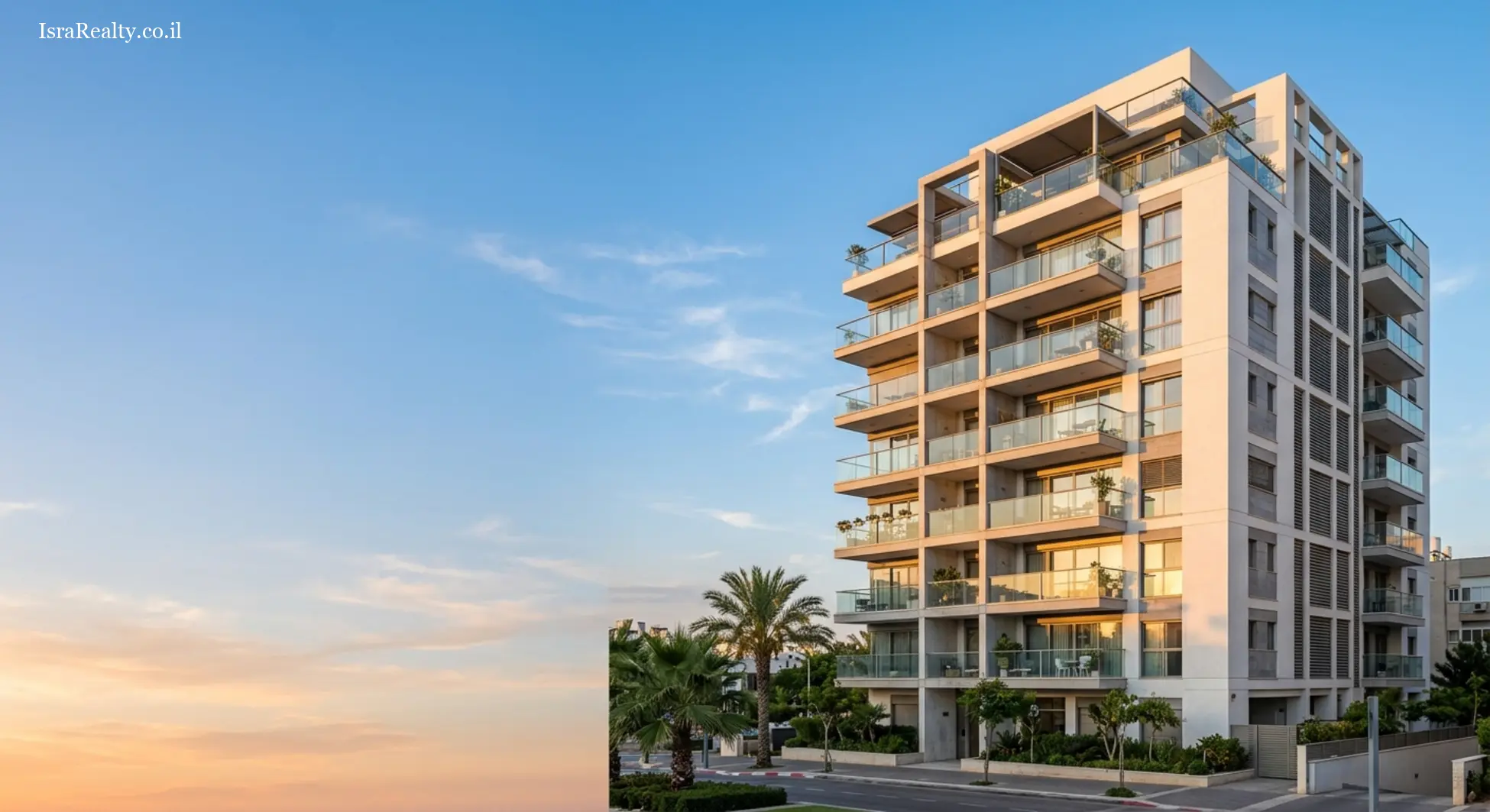
Investing in New Developments in Israel at Early Construction Stages
IsraRealty Team
Real Estate Market Analytics Department
Investing in new Israeli developments at the off-plan stage is a classic capital appreciation strategy that allows you to enter a project at the minimum price and earn returns from the increase in market value by the time the property is completed. Purchasing an apartment at the early design or initial construction phase gives investors the advantage of choosing the layout and flexibility in the payment schedule, which is critical given the high dynamics of the Israeli market.
- Maximum Growth Potential: The price difference between the off-plan stage and the finished property can be significant, providing high returns on invested capital.
- Legal Protection: All transactions for new developments in Israel are protected by the "Sale Law" (Chok Mecher), which guarantees the buyer's funds through bank guarantees.
- Flexible Financial Terms: Popular payment schemes (e.g., 20/80) allow the investor to pay only a small portion of the cost upfront, preserving liquidity until construction is complete.
- Location Determines Liquidity: Investments in coastal cities (Netanya, Bat Yam) and the center of the country (Tel Aviv) remain the most stable in terms of rental demand and future resale.
Advantages of Buying an Apartment at the Off-Plan Stage
Entering a deal when the property exists only as a blueprint or is at the excavation stage opens up opportunities unavailable on the secondary market. In Israel, developers are interested in attracting early capital to finance the project, which is why they offer the most favorable terms.
- Choice of the Best Units: At the start of sales, apartments with the best views, optimal floors, and popular layouts are available.
- Price Locking: Despite potential price increases in the country, the base cost of the property is fixed in the contract.
- Modern Standards: Every new residence is built according to current safety requirements (including MAMAD—a protected room), energy efficiency, and underground parking.
Financial Instruments and Taxes: Mashkanta and Mas Rechisha
The economics of a new development deal are based on a combination of equity, developer financing, and a mortgage loan (Mashkanta). It is important to remember that when buying an apartment in Israel, there is an obligation to pay a purchase tax—Mas Rechisha.
The tax rate depends on the buyer's status (resident or non-resident) and whether this apartment is their only residence. For investors buying a second or subsequent property, the tax burden is higher, which must be factored into the ROI calculation at the initial stage.
Popular Payment Schemes
Today, developers in Israel often offer installment programs that make investing more accessible:
- 20/80 Scheme: The buyer pays 20% upon signing the contract, and the remaining 80% before receiving the keys.
- 10/90 Scheme: A more aggressive option often found in large residential complexes in highly competitive locations.
- Individual Schedule: Linking payments to construction milestones (completion of frame, finishing, etc.).
Protecting Investor Interests: "Chok Mecher" Law and Tabu
The security of new development transactions in Israel is among the highest in the world. The primary protection tool is the "Sale Law" (Chok Mecher). Under this law, the developer does not receive money directly—funds are deposited into a secure escrow account at a companion bank. The buyer receives a bank guarantee for every payment made.
After construction is complete and the property is delivered, the procedure for registering ownership in the government registry (Tabu) is the final step in securing the asset. Expert legal support ensures the property is free of liens and the developer holds all necessary building permits.
Comparison of Investment Stages in Real Estate
| Parameter | Off-plan | 50% Ready | Finished Property |
|---|---|---|---|
| Entry Price | Minimum | Average | Market (Max) |
| Layout Choice | Maximum | Limited | From remaining |
| Time to ROI | 3–5 years | 1.5–2 years | Immediate (rental) |
| Indexing Risk (Madad) | High | Medium | None |
| Payment Flexibility | High (installments) | Medium | Usually full payment |
Are you planning to invest in new developments but aren't sure which location to choose for maximum liquidity? Our experts will conduct a developer audit, verify the legal status of the object in Tabu, and help you draft a profitable payment schedule.
Geography of Investment: Where to Buy an Apartment in Israel?
The choice of location directly affects the exit strategy. In Israel, there are several key areas of interest:
- Tel Aviv: The most expensive and sought-after market. Investments here primarily focus on capital preservation and steady growth in square meter value.
- Netanya and Bat Yam: Coastal cities popular among both residents and foreign investors. High potential for short-term and long-term rentals.
- Haifa: A city with a developed IT sector and major universities. Here, you can find properties with a lower entry barrier and good rental yields.
- Periphery (Development Towns): Suitable for long-term strategies, particularly those leveraging government urban renewal programs (Pinui-Binui).
Risks: Building Materials Price Index (Madad)
One important nuance when buying new property in Israel is linking the unpaid balance to the Building Materials Price Index (Madad Tesumot HaBniya). If the prices of concrete, steel, and labor rise, the final cost of the apartment for the buyer may also increase. Professional guidance allows you to calculate potential risks in advance and minimize the index's impact through early payments or negotiations with the developer.
Get access to closed pre-sale offers and off-market objects in Israel's best new developments. We provide full legal support and assistance with Mashkanta calculations.
Get ConsultationFrequently Asked Questions
Is it safe to buy an apartment in Israel at the off-plan stage?
Yes, it is absolutely safe provided the "Sale Law" (Chok Mecher) is followed. Your funds are protected by bank guarantees, and the transaction is overseen by a bank that monitors the developer's use of funds.
What is Mas Rechisha and who pays it?
Mas Rechisha is a real estate purchase tax. It is paid by the buyer within 60 days of signing the contract. The tax rate is progressive and depends on whether the buyer is an Israeli tax resident and whether they own other property.
Can you get a Mashkanta for a property under construction?
Yes, Israeli banks provide mortgages (Mashkanta) for purchasing new developments. However, mortgage payments are usually linked to construction stages, and it is best to obtain pre-approval before signing the purchase agreement.
How does the building materials index affect the price?
If the contract includes a link to the "Madad Tesumot Ha-Bniya," the percentage change in the index is added monthly to the balance owed to the developer. This can increase the final cost of the apartment by a few percentage points over the construction period.
Do I need to pay a commission to a realtor when buying a new property?
In many cases, when buying an apartment directly from a developer through an agency, the commission for the buyer is 0%, as the developer covers the mediator's fees. This makes investments in the primary market more advantageous compared to the secondary market.
Conclusion
Investing in new developments in Israel requires a systematic approach: from a deep analysis of the location to a detailed review of contract terms and tax planning. The off-plan stage remains the most profitable entry point, protected at the legislative level. Working with professional consultants allows you to minimize indexation risks and select a property with the highest potential for medium-term capitalization.
This material is for informational purposes and does not constitute individual investment advice. Prices and tax rates may change in accordance with Israeli legislation.
Updated: April 16, 2026
Need targeted options?
Find properties for this scenario
Leave a request and we will build a shortlist by area, budget, and property type without a public listing grid.
Get Property ShortlistMore articles on this topic
An editorial selection on market context, locations, and purchase scenarios.