Articles
Investing in Israeli Seaside Real Estate: A Buyer's Guide
Investing in Israeli seaside real estate: from selection to keys. Professional Tabu verification, assistance with Mashkanta, and deal support from IsraRealty. C
V
Viola Goldberg
- April 17, 2026
- 8 min reading time
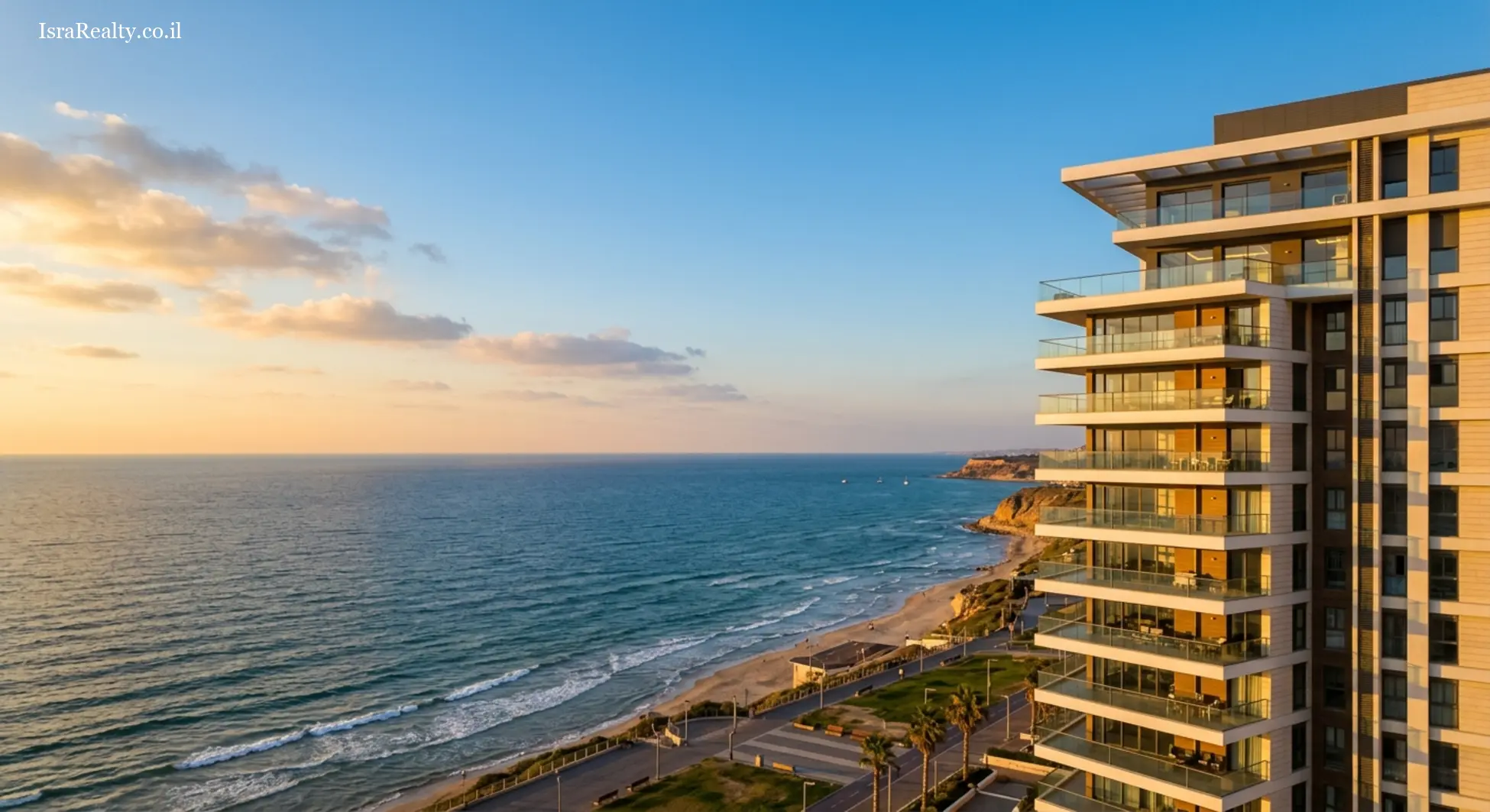
Seaside Investment Properties in Israel
IsraRealty Team
Real Estate Market Analysis Department
Investments in Israeli real estate by the sea provide stable yields of 3–5% per annum and steady capital growth due to the limited land resources along the coastline. In 2024–2025, the focus of investors shifted to projects in Tel Aviv, Netanya, and Bat Yam, where infrastructure development and urban renewal programs (TAMA 38 and Pinui-Binui) create additional potential for asset value growth. Purchasing a home on the front line requires in-depth legal verification in the Tabu and an understanding of the tax burden, including Mas Rechisha (purchase tax).
- Yield and Liquidity: Seaside properties in Israel remain the most liquid assets, demonstrating historical price growth above the market average.
- Legal Security: A mandatory step in the transaction is to verify the extract from the Tabu or the Israel Land Authority (ILA) registry to confirm ownership rights and the absence of encumbrances.
- Tax Planning: Buyers of investment apartments must account for Mas Rechisha, with rates for owners of more than one apartment in Israel starting at 8%.
- Mortgage Leverage: Mashkanta (mortgage) is available to both residents and foreign investors (LTV up to 50% for non-residents), which allows for increased equity return.
Why the Israeli coast is a strategic choice for investment?
Real estate on the front line of the sea in Israel is not just a home, but a scarce investment asset. The country's geographical features limit the supply in the coastal zone, while demand from both local residents and foreign buyers is constantly growing. The primary interest lies in new developments in Israel by the sea, offering modern comfort standards: underground parking, smart home systems, and gated areas.
Investors choose coastal cities for three reasons:
- High demand for short-term and long-term rentals: The tourism potential and business activity in cities like Tel Aviv and Herzliya guarantee property occupancy.
- Resilience to crises: Even during periods of market stagnation, seaside apartments in Israel adjust in price less than properties in peripheral areas.
- Infrastructure development: The construction of the light rail (tram) in Gush Dan has significantly increased the accessibility of the coastal areas of Bat Yam and Jaffa.
Overview of key seaside investment cities
Tel Aviv: The epicenter of liquidity
Tel Aviv remains the most expensive and prestigious market. Investment real estate in Tel Aviv is oriented toward the high-end segment. Properties in the Old North, Neve Tzedek, and along the promenade are highly sought after. The cost per square meter here is the highest, but the long-term capital appreciation potential remains unrivaled.
Netanya: Resort comfort and a Russian-speaking environment
Those looking for a balance between price and quality of life aim to buy an apartment in Netanya. The city boasts an extensive coastline with modern promenades. Neighborhoods like Ir Yamim offer luxury apartments in new high-rise complexes with panoramic sea views.
Bat Yam: A city on the verge of transformation
Housing in Bat Yam is still more affordable than in Tel Aviv, despite their practical merger. Thanks to the launch of the light rail's "Red Line," investments in Bat Yam have become some of the most promising. TAMA 38 programs are actively changing the look of old seaside quarters, turning them into modern residential zones.
Haifa: Accessible entry and rental potential
Real estate in Haifa attracts investors with a lower entry point. Apartments in the Downtown area and by the sea (Bat Galim) are in demand among students and young professionals. Rental yields here can be higher than in the center of the country due to lower purchase prices.
Comparison of investment indicators for coastal cities
| City | Demand Type | Average Yield | Investor Profile | Infrastructure |
|---|---|---|---|---|
| Tel Aviv | Luxury / Business | 2.5% – 3.2% | Large Capital | Maximum |
| Netanya | Family / Resort | 3.0% – 4.0% | Medium / Above Average | High |
| Bat Yam | Dynamic / Local | 3.5% – 4.5% | Developing Investor | Growing Actively |
| Haifa | Student / Budget | 4.0% – 5.0% | Beginner Investor | Developed |
Choosing a property by the sea requires not only location analysis but also an in-depth check of legal integrity. IsraRealty specialists will help you conduct an audit of the Tabu extract and find properties with maximum growth potential in Netanya, Tel Aviv, and other coastal cities.
Legal aspects and Tabu property verification
Buying an apartment in Israel is a process strictly regulated by the state. First, the buyer's lawyer orders an up-to-date extract from the land registry (Tabu). This document contains information about the actual owner, the property area, and the presence of "warning notes" (Hearat Azara), which may indicate liens or legal disputes.
Important verification nuances:
- Registration Type: The property may be registered in the Tabu, the Israel Land Authority (ILA), or the developer's registry (Hevra Meshakena). Each type has its own specifics when finalizing the deal.
- Verification of Addition Rights: In the case of purchasing secondary housing under TAMA 38, it is important to ensure that the rights to add floors have not been transferred to third parties.
- Encumbrances: The seller's Mashkanta must be paid off or transferred during the transaction, which is recorded in the purchase and sale agreement.
Taxes and associated purchase costs
Investors must account for the purchase tax — Mas Rechisha. For those buying a second apartment (an investment property), the rates are significantly higher than for buyers of a single home. Transaction reporting (Form 7000) must be submitted to the tax authority within 30 days from the date of signing the contract.
Additional expenses include:
- Lawyer fees (typically 0.5% – 1% + VAT).
- Real estate agent commission (if applicable). When buying new developments through IsraRealty, the commission is often 0%.
- Appraiser (Shamai) services for obtaining a Mashkanta.
- Registration fees for Tabu recording.
TAMA 38 and Pinui-Binui programs: An opportunity for the investor
Properties on the front line in old buildings often participate in urban renewal programs. TAMA 38 allows for strengthening the building and adding new floors, while Pinui-Binui involves the complete demolition of an old building and the construction of a modern complex in its place.
For an investor, this means:
- Area Increase: The owner of an old apartment receives a new unit with a larger area, a balcony, and parking.
- Value Growth: After the project is completed, the property price can increase by 20–40%.
- Timeline Risks: The approval and construction process can take from 5 to 10 years, which requires a long-term planning horizon.
Financing: Obtaining a Mashkanta in Israel
Mortgage lending (Mashkanta) is an effective tool for scaling investments. According to the directives of the Bank of Israel, there are limits on the Loan-to-Value (LTV) ratio:
- Up to 75% for the purchase of a first home by residents.
- Up to 50% for investment apartments (second home).
- Up to 50% for foreign citizens (non-residents).
It is important to remember the transparency reform for Mashkanta: banks are required to provide "standardized lending baskets," which makes it easier to compare terms. The validity of preliminary approval (Ishur Ekroni) is usually 24 days.
Want to invest in real estate on the Israeli coast with maximum benefit? We will find the property, verify its legal integrity, and help you obtain the best terms for your Mashkanta.
Get a consultationFrequently Asked Questions
What is the average rental yield by the sea in Israel?
The average yield is 3–5% per annum. In Haifa and Bat Yam, it can be slightly higher (up to 4.5%), while in the prestigious neighborhoods of Tel Aviv, it is closer to 2.5–3%, but with higher potential for the growth of the property value itself.
What is the Mas Rechisha tax for investors?
This is a real estate purchase tax. For investors purchasing a property that is not their only home, the tax rate in 2024 starts from 8% of the property value. There are different tax brackets depending on the transaction price.
Can I buy an apartment in Israel remotely?
Yes, the transaction can be completed through an authorized representative via a notarized power of attorney. The signature on the power of attorney abroad must be certified at an Israeli consulate or apostilled and confirmed by a local notary.
What is the difference between TAMA 38 and Pinui-Binui?
TAMA 38 is the strengthening and reconstruction of an existing building (often with added floors). Pinui-Binui is the complete demolition of an old building and the construction of a new modern complex. Both processes lead to a significant appreciation of the real estate.
How to check if an apartment is registered in the Tabu?
You must order an extract ("Nesach Tabu") from the official website of the Israel Ministry of Justice, using the block (Gush) and parcel (Chelka) number. If the property is not registered in the Tabu, rights are verified in the Land Authority registry or the developer's registry.
Conclusion: The Israeli seaside real estate market remains one of the most stable directions for preserving and increasing capital. Despite the tax burden, the supply shortage on the front line guarantees asset liquidity in the long term. The success of an investment depends on choosing the right location and performing thorough legal due diligence on the transaction.
Disclaimer: This article is for informational purposes only and does not constitute individual investment or legal advice. Prices and tax rates may change in accordance with Israeli law.
Last updated: 2024-05-22
Need targeted options?
Find properties for this scenario
Leave a request and we will build a shortlist by area, budget, and property type without a public listing grid.
Get Property ShortlistMore articles on this topic
An editorial selection on market context, locations, and purchase scenarios.