Articles
Investing in Israeli Real Estate: Yields and Passive Income
Investing in Israeli real estate: passive income from rentals, mortgage (mashkanta), and legal transaction support. Get a free consultation from IsraRealty expe
V
Viola Goldberg
- April 22, 2026
- 6 min reading time
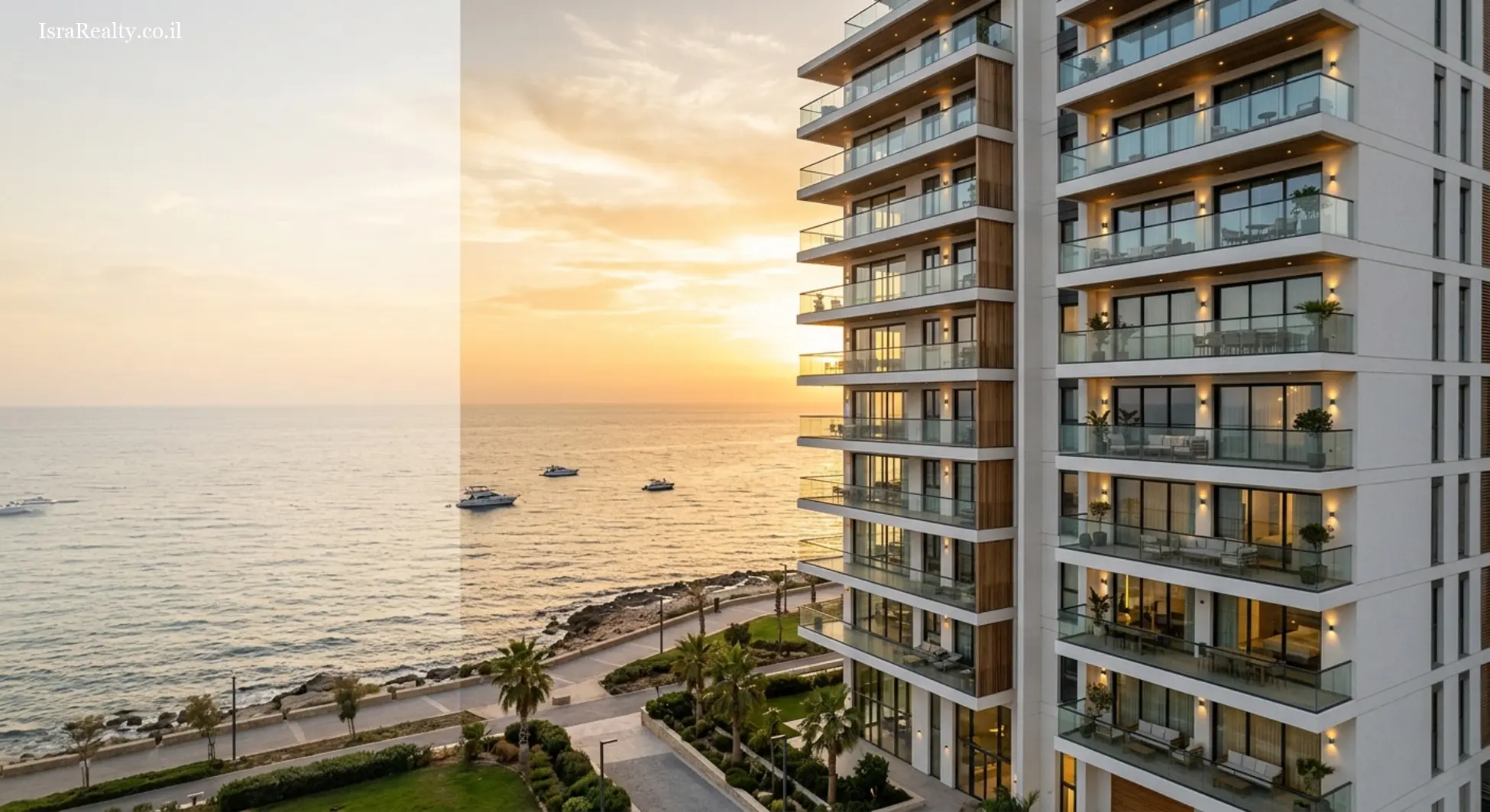
Investing in Israeli Real Estate for Passive Income
IsraRealty Team
Real Estate Market Analytics Department
Investing in Israeli real estate remains one of the most reliable ways to preserve capital and generate stable passive income. Despite global economic challenges, the Israeli market demonstrates resilience, driven by supply shortages and constant demand growth. Average annual rental yields in the country vary from 2.5% to 4.5% depending on the region, and the legal clarity of transactions is guaranteed by strict state control through the Tabu (Land Registry) system.
- Legal Security: Ownership rights are recorded in the state registry (Tabu) or through confirmation of rights from the Israel Land Authority (ILA/RAMI).
- Tax Optimization: There are preferential tax thresholds for rental income, allowing for legal minimization of expenses.
- Flexible Financing: Investors can use a mortgage (mashkanta) covering up to 50% of the property value for a second home.
- Growth Potential: In addition to rental income, investors profit from natural asset appreciation over a 5-10 year horizon.
Why choose Israel for passive income?
The Israeli real estate market differs significantly from European or American markets. The key factor here is the "demographic driver": high birth rates and stable immigration (Aliyah) create a constant need for housing. For an investor, this means a low vacancy rate—finding a tenant in the center of the country typically takes just a few weeks.
Passive income is formed from two components:
- Monthly rental payments: A stable cash flow that can cover mortgage payments.
- Property appreciation: Historically, housing prices in Israel show long-term growth that outpaces inflation.
Main Investment Strategies
1. Purchasing Ready-to-Move-In Property (Secondary Market)
This strategy is suitable for those who want to earn income immediately. Secondary market deals allow you to assess the real condition of the property, neighborhood infrastructure, and current demand. Popular cities for this strategy: Haifa (high yield due to a lower entry barrier) and the suburbs of Tel Aviv.
2. Investing in New Developments ("Off-plan")
Buying an apartment in the early stages of construction often involves flexible payment schedules (e.g., a 20/80 scheme, where the main amount is paid upon receiving keys). This allows investors to lock in prices and profit from the increase in property value by the time construction is complete.
3. Urban Renewal Projects (Pinui-Binui and Tama 38)
A mechanism unique to Israel where an old building is demolished or reinforced, and the owner receives a new, more expensive apartment with more square footage and a modern security room (MAMAD). This provides a sharp jump in asset value without direct construction investments by the owner.
Real Estate Yields by Region
Choosing a city directly affects the risk/reward ratio. In the center of the country (Gush Dan), yields are lower, but liquidity and potential price growth are higher. In the north and south, you can find properties with higher current rental yields.
| City | Demand Type | Average Yield (%) | Investment Profile |
|---|---|---|---|
| Tel Aviv | Very High | 2.0% – 2.8% | Maximum liquidity, luxury segment |
| Haifa | High (students) | 3.5% – 4.5% | Low entry barrier, student rentals |
| Netanya | Resort / Residential | 2.8% – 3.2% | Popular with foreigners, coastal zone |
| Bat Yam | Residential (developing) | 3.0% – 3.4% | Proximity to Tel Aviv, light rail development |
Selecting an investment property requires a deep analysis of local zoning plans. IsraRealty experts can help find off-market offers and verify the legal status of the property in the Tabu before signing the contract.
Investor Taxes and Expenses
It is important to consider associated costs when calculating net profit. In Israel, buying investment real estate (second and subsequent apartments) is subject to Purchase Tax (Mas Rechisha). The tax rate is progressive and starts at 8% of the property value.
Rental Income Taxation
For individuals, there are three main ways to pay tax on rental income:
- Full Exemption: If total rental income does not exceed the legal threshold (approximately 5,650 NIS per month in 2024).
- Fixed 10% Rate: Applied to total income without the ability to deduct expenses (convenient for expensive housing).
- Graduated Tax: Tax paid according to your personal income tax bracket with the ability to deduct depreciation and maintenance expenses.
Transaction Stages and Legal Support
The purchasing process in Israel is strictly regulated and requires the participation of lawyers for both parties. The buyer's lawyer is responsible for verifying the "purity" of the property.
- Obtaining a Tabu extract (Nussach Tabu): Verifying ownership, checking for liens or foreclosures.
- Recording a "Cautionary Note" (He'arat Azhara): A priority action after signing the contract that blocks any other transactions involving the property.
- Obtaining a Mortgage (Mashkanta): Getting initial approval from the bank (valid for 24 days).
- Filing a Declaration: Within 30 days of the deal, you must report to the tax authority (Form 7000).
Planning an investment in the Israeli market? We provide full transaction support: from financial auditing to property management after purchase.
Get a consultationFrequently Asked Questions (FAQ)
What is the maximum mortgage amount an investor can receive?
For investment properties (second apartments), Israeli banks typically offer up to 50% of the property's appraised value. For a first apartment, this threshold can reach 75%.
Do I have to pay capital gains tax when selling an apartment?
Yes, there is a capital gains tax (Mas Shevach), which is 25% of the net profit made from the difference between the purchase and sale price, factoring in inflation and documented home improvement expenses.
Who pays the broker's commission?
In Israel, the standard broker commission is 2% + VAT of the deal amount. However, when purchasing new developments from a builder through IsraRealty, the commission is often not charged to the buyer.
How do I check if an apartment is problematic?
The primary verification tool is the extract from the registry (Tabu). It is also necessary to verify the property's compliance with municipal plans (Irit) regarding illegal modifications and outstanding municipal tax debts (Arnona).
Can I manage the property remotely?
Yes, there is a well-developed market for property management companies in Israel that handle finding tenants, collecting rent, and technical maintenance for a fee of 8–10% of the rent.
Conclusion
Investing in Israeli real estate requires a balanced approach to location selection and a deep understanding of tax legislation. Stable passive income is possible here only with proper transaction structuring and the right strategy—whether it's aggressive growth in developing areas or conservative capital preservation in liquid properties in the center of the country. Thorough legal verification and the use of professional financial tools (mortgages) help minimize risks and maximize returns on invested capital.
Disclaimer: This material is for informational purposes only and does not constitute individual investment or legal advice. Market conditions are subject to change.
Last updated: April 22, 2024.
Need targeted options?
Find properties for this scenario
Leave a request and we will build a shortlist by area, budget, and property type without a public listing grid.
Get Property ShortlistMore articles on this topic
An editorial selection on market context, locations, and purchase scenarios.

April 18, 2026
Investments in Israel's Commercial Real Estate: Offices and Shopping C
Invest in Israel's commercial real estate: offices and shopping centers with yields from 6%. Legal verification in Tabu, full transaction support. Call IsraReal
Read article
April 17, 2026
Investing in Israeli Seaside Real Estate: A Buyer's Guide
Investing in Israeli seaside real estate: from selection to keys. Professional Tabu verification, assistance with Mashkanta, and deal support from IsraRealty. C
Read article